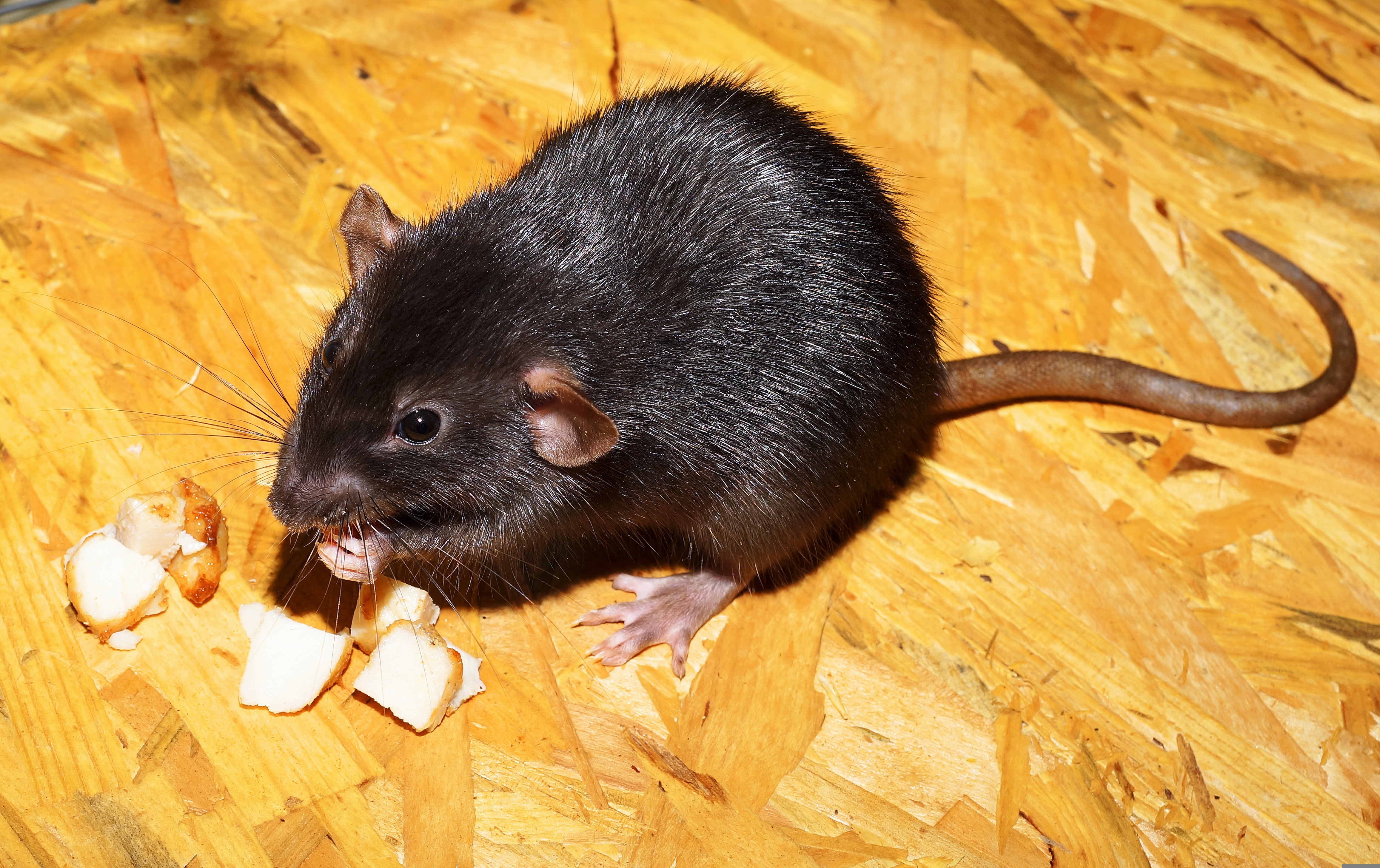
House Rat (Norway Rat / Brown Rat)
Rattus norvegicus — The most widespread and destructive rat species in urban environments
Overview
The Norway rat (Rattus norvegicus), also commonly known as the house rat, brown rat, common rat, street rat, sewer rat, or wharf rat, is the most prevalent rat species in the United States and the dominant urban rat worldwide. Despite its name, the Norway rat did not originate in Norway. It is believed to have evolved in northern China and central Asia before spreading globally via shipping routes during the 18th century.
Norway rats are highly commensal, meaning they have evolved to live alongside humans. They cause significant structural damage through gnawing and burrowing, contaminate food supplies, and transmit serious diseases. In the United States alone, rats cause an estimated $19 billion in damage annually. They are a major public health concern in every major city.
Identification
Proper identification is critical because Norway rats and roof rats (Rattus rattus) require different control strategies. Norway rats are ground-level burrowers, while roof rats are climbers.
Physical Appearance
- Size: Large and robust; body 7–9.5 inches, plus a 6–8 inch tail
- Weight: Adults typically 200–500 grams; some individual rats exceed 500g
- Color: Coarse, brownish-gray fur on top with a lighter gray or tan belly
- Snout: Blunt and rounded (versus the pointed snout of roof rats)
- Ears: Small and close-set; do not reach the eyes when folded forward
- Tail: Thick, scaly, and shorter than the combined head and body length — this is the most reliable way to distinguish Norway rats from roof rats
- Eyes: Small relative to head size
Norway Rat vs. Roof Rat
- Norway rat: Blunt snout, small ears, thick tail shorter than body, ground-level nester and burrower
- Roof rat: Pointed snout, large ears, thin tail longer than body, nests in attics and high locations
Misidentification can lead to ineffective control strategies. Norway rats are treated at ground level; roof rats are treated at elevation.
Biology & Reproduction
Norway rats reproduce rapidly, making early intervention critical.
- Sexual maturity: Reached at 8–12 weeks of age
- Gestation period: Approximately 21–23 days
- Litter size: 6–12 pups (average 8–10)
- Litters per year: 4–6 under favorable conditions
- Lifespan: Up to 1 year in the wild; 2–3 years in captivity
Pups are born blind, hairless, and completely dependent. They develop fur by day 7, open their eyes by day 14–17, and are weaned by 3–4 weeks. A single pair of Norway rats and their offspring can theoretically produce over 1,000 descendants in one year under ideal conditions.
Behavior & Habits
Activity Patterns
Norway rats are primarily nocturnal, becoming active at dusk to forage for food and water. Daytime sightings usually indicate a large, established population where competition for food forces some individuals to forage during the day.
Neophobia
Unlike mice, Norway rats are neophobic — they are suspicious of new objects, foods, and changes in their environment. This makes trapping more challenging, as rats may avoid new traps and bait stations for several days before approaching them. Pest control professionals account for this by placing unset traps for 2–3 days before baiting and setting them.
Burrowing
Norway rats are powerful diggers and construct elaborate burrow systems for nesting, shelter, and food storage. Burrows are typically found:
- Along building foundations and under concrete slabs
- Under woodpiles, debris, and dense vegetation
- Along stream banks, ditches, and sewers
- Under decks, patios, and outdoor structures
Burrows typically have a main entrance (2–3 inches in diameter), one or more escape holes, and may extend 6.5 feet or more underground.
Diet
Norway rats are true omnivores with broad dietary preferences:
- Cereal grains, breads, and pasta
- Meat, fish, and pet food
- Fruit, nuts, and vegetables
- Garbage and food scraps
- Invertebrates, small fish, and bird eggs
Rats require 0.5–1 ounce of water daily when consuming dry food. They are excellent at detecting contaminated or spoiled food and will avoid it — a trait called bait shyness.
Physical Abilities
- Excellent swimmers — can tread water for up to 3 days and swim through sewer pipes, including through toilet traps
- Can squeeze through holes as small as 1/2 inch (the size of a quarter)
- Can jump vertically up to 36 inches and horizontally up to 48 inches
- Can fall from heights up to 50 feet without serious injury
- Strong jaw force — can gnaw through wood, lead pipes, cinder blocks, and even aluminum sheeting
Signs of Rat Infestation
- Droppings: Blunt, capsule-shaped, dark pellets approximately 1/2–3/4 inch long (much larger than mouse droppings); Norway rats produce 40–50 droppings per day
- Burrows: Holes 2–3 inches in diameter along foundations, under debris, and in embankments
- Gnaw marks: Large, rough gnaw marks on wood, plastic, wiring, and even concrete
- Grease marks (rub marks): Dark, oily smears along walls, pipes, and surfaces from repeated travel
- Runs: Well-worn pathways in grass, dirt, or along walls where rats travel regularly
- Sounds: Gnawing, scratching, and squeaking sounds, especially at night
- Urine odor: Strong, musky ammonia smell in enclosed areas
- Footprints and tail drag marks: Visible in dusty areas; hind foot tracks are approximately 3/4–1 inch long
Health Risks
Norway rats are vectors for numerous diseases and pose serious public health risks:
- Leptospirosis: Bacterial infection transmitted through contact with rat urine in water or soil; can cause kidney and liver failure
- Salmonellosis: Bacterial contamination of food and surfaces through droppings
- Rat-bite fever: Caused by bacteria transmitted through bites, scratches, or contact with dead rats
- Plague: Though rare in the modern U.S., Norway rats can carry infected fleas
- Murine typhus: Transmitted by fleas from infected rats
- E. coli and other pathogens: Spread through contaminated food and water
- Parasites: Rats carry fleas, ticks, mites, and internal parasites that can affect humans and pets
Property Damage
- Structural damage: Burrowing undermines foundations, concrete slabs, sidewalks, and retaining walls
- Electrical: Gnawing on wiring creates fire hazards and can cause power outages
- Plumbing: Rats gnaw through plastic pipes and can enter buildings through damaged sewer lines
- Insulation: Contamination and destruction of insulation in walls and attics
- Stored goods: Food stores, documents, inventory, and merchandise are frequently damaged
- Landscaping: Burrowing damages lawns, gardens, irrigation systems, and root zones
Where Norway Rats Are Found
Norway rats thrive in every U.S. city, particularly in dense urban areas with older infrastructure. PestPro provides rat control services across all service areas including New York, Philadelphia, Pittsburgh, Houston, Los Angeles, and Columbus.
Norway rats are especially prevalent in cities with extensive sewer systems, older buildings, and dense commercial corridors. They are commonly found in:
- Residential basements and crawlspaces
- Sewer systems and storm drains
- Restaurant and food service exteriors
- Loading docks and dumpster areas
- Construction sites and vacant lots
- Parks, waterfronts, and riverbanks
Professional Rat Control
Effective Norway rat control requires a comprehensive Integrated Pest Management (IPM) approach. Unlike mice, rats are cautious and intelligent, making amateur control efforts frequently unsuccessful.
Inspection
A thorough professional inspection maps active burrows, travel routes, entry points, food sources, and harborage areas. Inspectors look for droppings (size indicates species), grease marks, gnaw damage, burrow openings, and tracks.
Exclusion (Rat-Proofing)
Sealing entry points is essential. All openings larger than 1/2 inch must be closed with rodent-resistant materials:
- 24-gauge galvanized sheet metal
- 1/4-inch hardware cloth
- Concrete mortar for foundation gaps
- Metal kick plates on doors
- Floor drain grates with openings less than 1/4 inch
Trapping
Professional snap traps are the most effective method for eliminating rats indoors. Key strategies include:
- Place traps along walls, behind objects, and near burrow entrances
- Set the trigger end touching the wall
- Leave unset, baited traps for 2–3 days to overcome neophobia before setting
- Use peanut butter, bacon, dried fruit, or nesting material as bait
- Check and reset traps daily
Baiting Programs
Tamper-resistant bait stations with rodenticide are used for exterior control, especially around commercial properties and in sewer systems. Stations are locked and anchored to prevent access by children, pets, and non-target wildlife.
Burrow Treatment
Active burrows can be treated with tracking powder or dry formulation rodenticides applied directly into the burrow system. After elimination, burrow openings are sealed to detect reinfestation.
Prevention Tips
- Seal all gaps and holes larger than 1/2 inch in foundations, walls, and around pipes
- Keep dumpsters and trash containers clean, closed, and on hard surfaces
- Remove debris, woodpiles, and dense vegetation from building perimeters
- Store food and pet food in sealed metal containers
- Fix leaking outdoor faucets and eliminate standing water
- Maintain sewer lines and repair damaged drain pipes
- Trim trees and shrubs away from rooflines and walls
- Install metal kick plates on exterior doors
- Report rat sightings to local health departments for community-wide control
Frequently Asked Questions
How do rats get into my house?
Norway rats can squeeze through any opening larger than 1/2 inch. They commonly enter through foundation cracks, gaps around pipes and utility lines, damaged sewer connections, open garage doors, and even toilet drains from sewer systems.
Are rats dangerous?
Yes. Rats transmit numerous diseases, contaminate food with droppings and urine, cause structural damage through gnawing and burrowing, and create fire hazards by chewing on electrical wiring.
Can rats chew through concrete?
Rats can gnaw through deteriorated, thin, or uncured concrete and mortar. They cannot easily chew through solid, well-cured concrete, but they can enlarge existing cracks and weakened areas.
What is the difference between rats and mice?
Rats are significantly larger (7–10 inches body vs. 2.5–4 inches for mice), produce larger droppings, have thicker tails, and are more cautious of new objects. They require different control strategies. Learn more about the house mouse.
Will cats keep rats away?
While cats may deter or catch some mice, most domestic cats are not effective at controlling established rat populations. Adult Norway rats are large, aggressive, and can weigh over a pound.
How long does professional rat control take?
Due to neophobia, rat control typically takes longer than mouse control. Most infestations require 3–6 weeks of active trapping and exclusion work, followed by ongoing monitoring.
Need Rat Control?
Our experts eliminate rat infestations at the source and seal your property against reentry. Get a free, no-obligation quote today.
Get a Free Quote Call (844) 578-0573