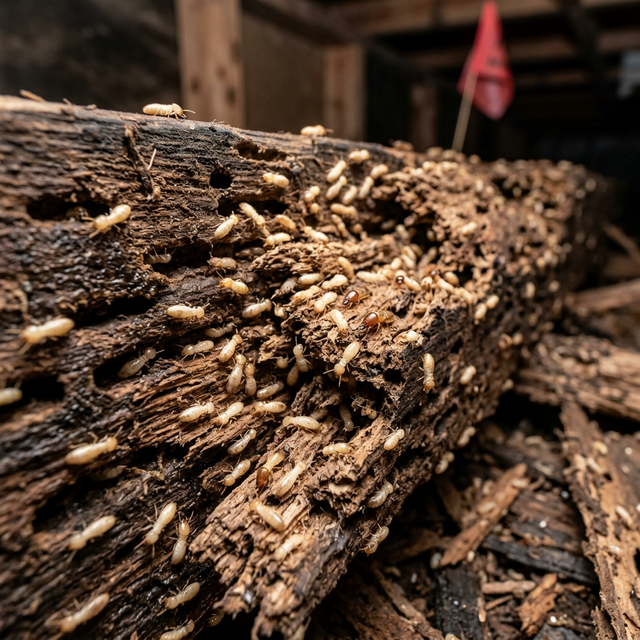
Termites
Isoptera
Overview
Termites cause an estimated $5 billion in property damage in the United States every year — damage that is typically not covered by homeowners insurance. The most common and destructive species are subterranean termites (Reticulitermes spp. and Coptotermes formosanus — the Formosan termite). Drywood termites (Cryptotermes and Incisitermes spp.) are significant pests in southern coastal states. Unlike carpenter ants, termites actually consume wood, feeding on the cellulose within it.
Identification
- Workers: creamy white, soft-bodied, 3–5 mm, rarely seen in the open
- Soldiers: larger head with mandibles, creamy body, defend the colony
- Swarmers (reproductives): dark brown to black, 8–10 mm with two pairs of equal-length wings
- Subterranean termites require ground contact or moisture; build mud tubes for travel
- Drywood termites live entirely within wood; no ground contact needed
Behavior & Habitat
Termites live in large colonies that can number from thousands to millions. Subterranean termites build their main colony underground and construct mud tubes (pencil-width tunnels of soil and saliva) to reach wood above ground while maintaining moisture. They can consume wood 24 hours a day, 7 days a week. Drywood termites infest dry, sound wood and create small kick-out holes to push out frass (wood-colored pellets). Swarming typically occurs in spring or fall.
Signs of Infestation
- Mud tubes on foundation walls, piers, or pipes (subterranean termites)
- Frass — small, wood-colored hexagonal pellets below infested wood (drywood termites)
- Discarded wings near windows or doors after swarming events
- Wood that sounds hollow when tapped
- Buckling paint, sagging floors, or doors/windows that stick without other cause
Prevention Tips
- Eliminate wood-to-ground contact around the home
- Maintain at least 6 inches between soil and wood siding or framing
- Fix all plumbing and roof leaks promptly — moisture attracts subterranean termites
- Ensure proper drainage away from the foundation
- Do not stack firewood or lumber against the house
Professional Treatment
Professional termite control is essential. For subterranean termites, liquid soil treatments (termiticides) create a continuous barrier around the foundation. Bait station systems use slow-acting toxicants that workers carry back to the colony, eventually eliminating the queen. For drywood termites, localized treatments (foam or injectable termiticides) or whole-structure fumigation may be necessary. Annual inspections are strongly recommended.
Need Termites Control?
Our experts are ready to help. Get a free, no-obligation quote today.
Get a Free Quote Call (844) 578-0573