Stinging Insects
Hymenoptera (Vespidae, Xylocopinae)
Overview
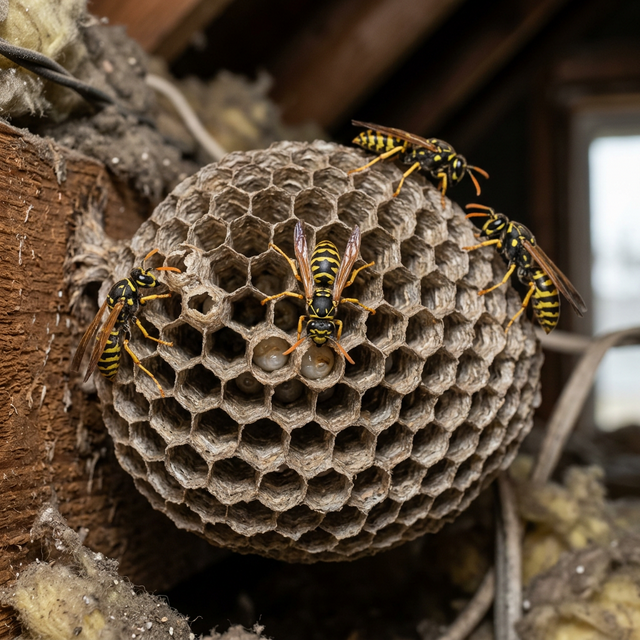
Stinging insects in the order Hymenoptera include yellowjackets (Vespula spp.), paper wasps (Polistes spp.), bald-faced hornets (Dolichovespula maculata), European hornets (Vespa crabro), and carpenter bees (Xylocopa spp.). Stings send over 500,000 Americans to the emergency room each year. While honeybees are important pollinators and generally non-aggressive, wasps and yellowjackets can be highly aggressive, especially near their nests or food sources in late summer and fall.
Identification
- Yellowjackets: 12–16 mm, black and yellow banded, smooth body, nest in ground or wall voids
- Paper wasps: 16–20 mm, slender, brown with yellow markings, build open umbrella-shaped nests
- Bald-faced hornets: 15–20 mm, black with white face markings, build large enclosed paper nests
- Carpenter bees: 20–25 mm, resemble bumblebees but with a shiny, hairless black abdomen
- All have two pairs of wings and a stinger (females only)
Behavior & Habitat
Social wasps and hornets build nests from chewed wood fibers mixed with saliva. Colonies are annual — founded by a single queen in spring and growing to hundreds or thousands of workers by late summer. Workers become increasingly aggressive in fall as the colony peaks. Yellowjackets are attracted to human food and sweet drinks. Carpenter bees are solitary; females bore perfectly round 1/2-inch holes into unpainted or weathered wood to lay eggs.
Signs of Infestation
- Visible nests — paper combs under eaves, enclosed nests in trees, ground holes (yellowjackets)
- Increased wasp or bee activity around the home, especially near eaves and soffits
- Carpenter bee holes in fascia boards, decks, or wooden trim with sawdust below
- Aggressive behavior when approaching certain areas of the yard or home
- Finding dead wasps indoors — may indicate a nest in a wall void
Prevention Tips
- Seal gaps around soffits, eaves, and roof edges in early spring before nests are built
- Keep outdoor garbage cans tightly sealed
- Avoid leaving sweet drinks or food uncovered outdoors
- Paint or stain all exposed wood surfaces to deter carpenter bees
- Hang decoy wasp nests — some species avoid areas where another colony appears established
Professional Treatment
Professional removal is the safest approach for active nests. Technicians treat nests directly with fast-acting insecticides, typically at dusk when all workers have returned. Ground nests, wall void nests, and aerial nests each require specific techniques. Carpenter bee treatment involves injecting insecticidal dust into galleries, then sealing the holes after activity stops. Early-season treatment (spring) prevents colonies from growing large and aggressive.
Need Stinging Insects Control?
Our experts are ready to help. Get a free, no-obligation quote today.
Get a Free Quote Call (844) 578-0573