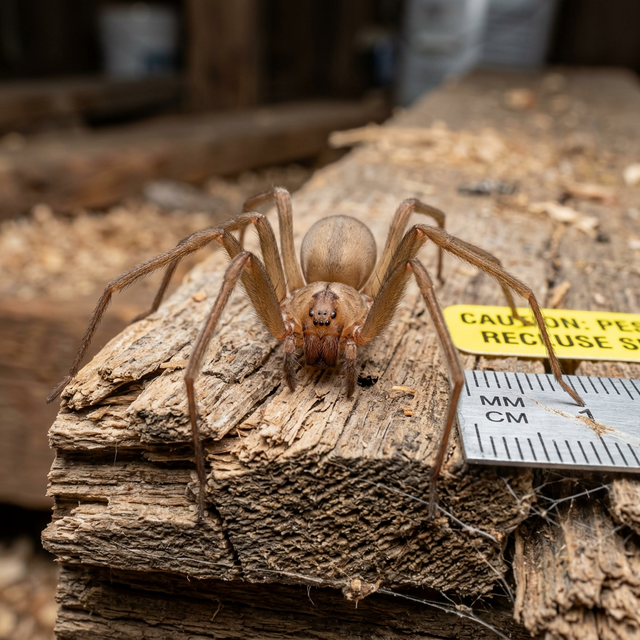
Spiders
Araneae
Overview
Spiders are arachnids (not insects) with approximately 45,000 known species worldwide. Most spiders are beneficial predators that help control other insect populations. However, a few species found in the United States can be medically significant: the brown recluse (Loxosceles reclusa) and black widow (Latrodectus spp.) can deliver venomous bites that require medical attention. Common house spiders, cellar spiders, and wolf spiders are frequently encountered but harmless.
Identification
- Eight legs, two body segments (cephalothorax and abdomen), no antennae
- Brown recluse: light to dark brown, 6–20 mm, violin-shaped mark on cephalothorax, six eyes
- Black widow: shiny black, 8–15 mm body, red hourglass on underside of abdomen
- Common house spider: yellowish-brown with dark markings, builds messy cobwebs
- Wolf spider: large (up to 35 mm), hairy, brown with stripes, hunts without a web
Behavior & Habitat
Spiders are solitary predators. Web-building species construct webs to trap prey, while hunting spiders (wolf spiders, jumping spiders) actively pursue insects. Brown recluses are reclusive and hide in undisturbed areas like closets, attics, and storage boxes. Black widows prefer dark, sheltered spots like garages, sheds, and under decks. Most spider bites occur when the spider is accidentally pressed against skin.
Signs of Infestation
- Webs in corners, window frames, basements, garages, and attics
- Egg sacs — small, round, silken balls found in webs or hidden areas
- Live spiders spotted in bathrooms, basements, or dark storage areas
- An increase in other insects (their food source) around the property
- Bites that produce red, swollen areas — seek medical attention for suspected recluse or widow bites
Prevention Tips
- Reduce clutter in basements, garages, attics, and closets
- Shake out shoes, gloves, and clothing stored in dark areas before wearing
- Seal cracks around windows, doors, and the foundation
- Switch outdoor lights to yellow "bug lights" to reduce insect prey near the home
- Remove woodpiles, rock piles, and yard debris from near the house
Professional Treatment
Spider control focuses on reducing their prey (other insects) and eliminating harborage sites. Perimeter treatments around the foundation and entry points create a barrier. Interior crack-and-crevice treatments target hiding spots. Web removal and de-webbing discourage re-establishment. For brown recluse infestations, sticky traps are used for monitoring and glue-board trapping in combination with residual treatments.
Need Spiders Control?
Our experts are ready to help. Get a free, no-obligation quote today.
Get a Free Quote Call (844) 578-0573