Silverfish
Lepisma saccharina
Overview
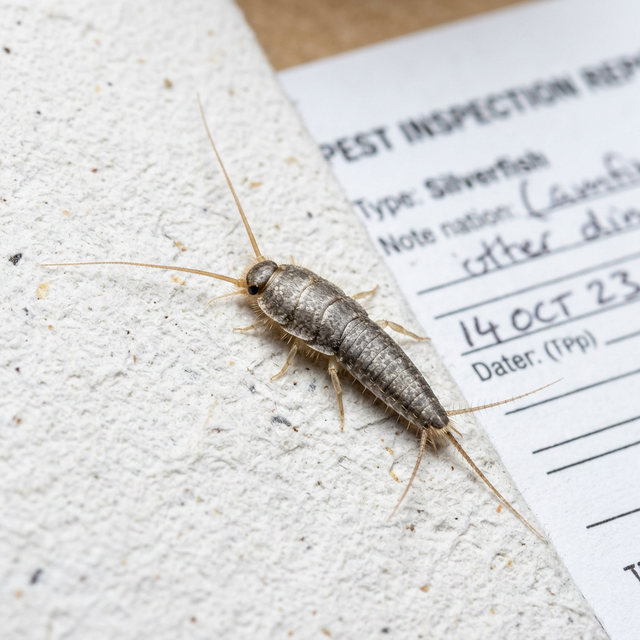
Silverfish (Lepisma saccharina) are small, wingless insects named for their silvery-gray color and fish-like wriggling movement. They are one of the oldest known insect species, with fossil records dating back over 400 million years — predating the dinosaurs. Silverfish thrive in humid environments (75–95% relative humidity) and are commonly found in bathrooms, basements, attics, and kitchens. While they do not bite or transmit diseases, they can cause significant damage to paper goods, wallpaper, books, and certain fabrics.
Identification
- Teardrop-shaped body, 12–19 mm long, covered in silvery scales
- Three long, bristle-like appendages at the rear (cerci)
- Two long antennae
- Wingless; moves with a rapid, side-to-side "swimming" motion
- Nocturnal — rarely seen during the day
Behavior & Habitat
Silverfish are nocturnal and very fast, making them difficult to catch or observe. They can live for 2–8 years and survive for months without food. They feed on carbohydrates and starches, including book bindings, wallpaper paste, paper, photos, sugar, coffee, hair, dandruff, and certain fabrics (cotton, linen, silk). They prefer dark, warm, humid environments and are often found in bathrooms, under sinks, in basements, and in stored boxes of books or papers.
Signs of Infestation
- Irregular holes or notches chewed in paper, wallpaper, or book pages
- Yellow stains on fabric, paper, or wallpaper
- Tiny pepper-like feces (black droppings) in infested areas
- Cast skins — silvery, translucent molted exoskeletons
- Sightings when turning on lights at night in bathrooms or kitchens
Prevention Tips
- Reduce humidity with dehumidifiers — aim for below 50% relative humidity
- Fix all plumbing leaks and ensure proper bathroom ventilation
- Store books, photos, and important papers in sealed plastic containers
- Vacuum regularly to remove food particles and eggs
- Seal cracks and gaps around baseboards, pipes, and window frames
Professional Treatment
Silverfish control begins with moisture reduction. Residual insecticides and silica-based dusts (like diatomaceous earth) applied in cracks, crevices, wall voids, and under baseboards are effective. Boric acid in wall voids provides long-term control. Sticky traps help monitor population levels. Because silverfish are long-lived and can survive without food, persistent treatment and ongoing humidity management are key to complete control.
Need Silverfish Control?
Our experts are ready to help. Get a free, no-obligation quote today.
Get a Free Quote Call (844) 578-0573