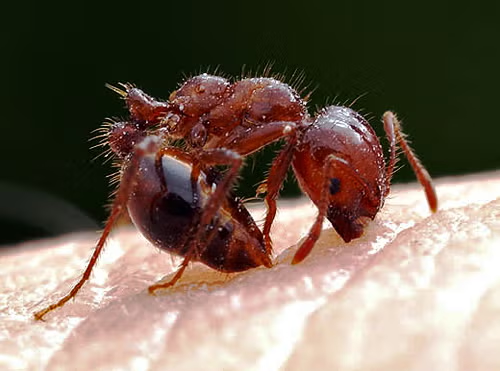
Fire Ants (Red Imported Fire Ant)
Solenopsis invicta — One of the most aggressive and invasive ant species in the United States
Overview
The red imported fire ant (Solenopsis invicta) is an invasive species native to the Pantanal region of South America, including parts of Brazil, Paraguay, Uruguay, and Argentina. The species name invicta means "invincible" in Latin, reflecting the ant's extraordinary resilience and adaptability.
Fire ants were first introduced to the United States in the 1930s through the port of Mobile, Alabama, likely via cargo ships carrying soil ballast. Since then, they have spread aggressively throughout the southeastern United States, parts of California, and have been introduced to Australia, Taiwan, China, Japan, and the Caribbean.
Fire ants are considered one of the most significant structural and outdoor pests in the southern U.S. Their painful stings, aggressive colony defense behavior, and ability to damage electrical equipment and agricultural crops make them a serious public health and economic concern.
Identification
Identifying fire ants can be challenging because they resemble several native ant species. However, a combination of physical characteristics, mound structure, and aggressive behavior makes them distinguishable.
Physical Appearance
- Size: Workers are polymorphic (variable sizes within the same colony), ranging from 1.5 mm to 6 mm (1/16 to 1/4 inch)
- Color: Reddish-brown head and thorax with a darker, shiny black abdomen (gaster)
- Body structure: Two-segmented waist (petiole and postpetiole), distinguishing them from many other ant species
- Antennae: 10-segmented with a distinctive two-segmented club at the tip
- Stinger: Present at the tip of the abdomen; used to inject alkaloid-based venom
Mound Identification
- Dome-shaped or cone-shaped mounds made of loose soil
- Typically 10–60 cm (4–24 inches) tall and up to 60 cm wide
- No visible entry hole on top — ants enter and exit through underground tunnels
- Usually found in open, sunny areas: lawns, roadsides, parks, pastures, and garden beds
- Can also nest under objects like logs, rocks, concrete slabs, and in wall voids of buildings
Key Identifier: Aggressive Swarming Behavior
When a mound is disturbed, hundreds to thousands of fire ants rapidly swarm out and climb onto anything nearby, delivering multiple painful stings simultaneously. This aggressive defensive response is unique to S. invicta and is the most reliable behavioral identifier.
Biology & Life Cycle
Fire ants are eusocial insects with a highly organized colony structure consisting of queens, workers, and reproductive alates (winged males and females).
Colony Structure
- Monogyne colonies: Contain a single queen; tend to be territorial and aggressive toward other fire ant colonies
- Polygyne colonies: Contain multiple queens; less territorial, more cooperative, and can reach higher population densities per acre
- Mature colonies can contain 100,000 to 500,000 workers
Life Cycle Stages
- Egg: Laid by the queen; tiny, white, and oval-shaped
- Larva: Blind, grub-like; fed by worker ants; develops over 6–12 days
- Pupa: Transition stage; develops adult features over 9–16 days
- Adult: Emerges as a worker (sterile female), reproductive female, or male
Worker ants live approximately 60–150 days, though some may survive up to 8 months. The queen continuously replaces workers and can sustain egg production for approximately 7 years under ideal conditions.
Mating Flights
Reproductive alates (winged ants) emerge from colonies during warm, humid weather, typically in spring and early summer. After mating flights, fertilized queens shed their wings, burrow into soil, and begin establishing new colonies. A newly mated queen can lay her first eggs within 24 hours.
Behavior & Habitat
Aggression and Defense
Fire ants respond to nest disturbance with extreme speed and aggression. When they detect vibration or pressure on the mound, workers rush to the surface and immediately begin stinging. Unlike honey bees, fire ants can sting repeatedly, each time injecting alkaloid-based venom.
A single worker first bites the skin with its mandibles to anchor itself, then pivots and inserts its stinger multiple times in a circular pattern, producing a characteristic ring of pustules.
Foraging
Fire ants are omnivorous, feeding on:
- Seeds, fruit, and nectar
- Other insects, spiders, and small invertebrates
- Small reptiles, amphibians, and ground-nesting bird chicks
- Honeydew produced by aphids and other sap-feeders
- Human food waste, grease, and sweet liquids
Workers forage primarily when soil surface temperatures are between 72°F and 97°F (22–36°C). Foraging activity decreases significantly during extreme heat or cold.
Flood Survival
One of the most remarkable fire ant adaptations is their ability to form buoyant rafts during floods. Workers link their bodies together to create a floating mass that protects the queen, brood, and colony. These rafts can float for days or even weeks, allowing colonies to survive major flood events and relocate to higher ground.
Preferred Habitat
- Open, sunny areas with disturbed or loosened soil
- Lawns, parks, playgrounds, athletic fields, and roadsides
- Agricultural land, pastures, and crop fields
- Areas receiving annual rainfall greater than 20 inches
- Regions where winter temperatures do not consistently fall below 10°F (-12°C)
U.S. Distribution
Fire ants are established across most of the southeastern United States, from Virginia and Maryland south to Florida, and west to Texas, Oklahoma, and New Mexico. Isolated populations exist in California and other western states.
States with established fire ant populations include:
- Texas, Louisiana, Mississippi, Alabama, Georgia, Florida
- South Carolina, North Carolina, Virginia, Tennessee, Arkansas
- Oklahoma, New Mexico, California
PestPro provides fire ant control services in several major cities within fire ant territory, including Houston, TX and Los Angeles, CA.
Fire Ant Stings
Sting Mechanism
Fire ants use their mandibles to grip the skin, then rotate their abdomen to sting multiple times. Each sting injects a venom composed primarily of piperidine alkaloids, along with proteins and peptides. The venom produces an intense burning sensation, giving fire ants their common name.
Symptoms
- Immediate: Sharp, burning pain; localized redness and swelling
- Within 24 hours: A small, fluid-filled blister forms, followed by a sterile white pustule
- Duration: Pustules typically resolve within 3–10 days; scratching can lead to secondary infections
Allergic Reactions
Approximately 1–2% of people stung by fire ants experience systemic allergic reactions. Symptoms of anaphylaxis include:
- Difficulty breathing or swallowing
- Swelling of the face, throat, or tongue
- Rapid heartbeat and dizziness
- Nausea, vomiting, or diarrhea
Anaphylaxis is a medical emergency requiring immediate treatment with epinephrine.
First Aid for Fire Ant Stings
- Move away from the mound to prevent additional stings
- Brush ants off the skin (do not slap, which may cause more stings)
- Apply cold compresses to reduce pain and swelling
- Take oral antihistamines to relieve itching
- Leave pustules intact to prevent secondary infection
- Seek emergency medical attention if signs of anaphylaxis develop
Property Damage
Beyond their painful stings, fire ants cause significant damage to:
- Electrical equipment: Fire ants are attracted to electrical fields and frequently nest inside junction boxes, air conditioning units, transformers, and traffic signal boxes, causing short circuits and equipment failure
- Landscaping: Large mounds damage lawns, gardens, and irrigation systems
- Agriculture: Fire ants attack young plants, seedlings, and fruit crops; they also damage farm equipment by nesting in machinery
- Structures: Colonies can establish inside wall voids, under foundations, and in crawlspaces
Annual fire ant damage in the United States is estimated at over $6 billion, including agricultural losses, medical costs, and infrastructure damage.
Professional Fire Ant Control
Effective fire ant management requires an Integrated Pest Management (IPM) approach combining multiple methods. Single-mound treatments alone are often insufficient because new colonies rapidly reinvade treated areas.
Broadcast Bait Treatment
The most effective broad-area strategy. Granular bait is applied across the entire property. Worker ants collect the bait and carry it back to the colony, where it is shared with the queen and brood. This method eliminates colonies you can see and colonies hidden underground.
- Apply when ants are actively foraging (soil temperatures between 65–95°F)
- Best applied in spring and fall when colony activity peaks
- Results may take 2–6 weeks as bait is distributed throughout the colony
Individual Mound Treatment
Direct treatment of visible mounds using liquid drenches, granular insecticides, or dust formulations. This method provides fast results for specific mounds but does not prevent reinvasion from untreated colonies nearby.
Perimeter Treatment
Insecticide barriers applied around building foundations and property borders to prevent fire ants from establishing mounds near structures.
Two-Step Method
The recommended approach for comprehensive fire ant management:
- Step 1: Broadcast bait application across the entire property
- Step 2: Individual mound treatment for any remaining active mounds 7–14 days after broadcasting
This two-step method is endorsed by university extension programs across the southern U.S. and provides the highest level of long-term fire ant suppression.
Prevention Tips
- Inspect your yard regularly for new mound activity, especially after rainfall
- Avoid disturbing mounds — mark them and contact a professional
- Keep ground cover and mulch away from building foundations
- Remove debris piles, woodpiles, and unused equipment from the yard
- Repair irrigation leaks that create moist soil conditions favorable to mound construction
- Wear protective footwear when walking in areas with known fire ant activity
- Teach children to recognize and avoid fire ant mounds
Frequently Asked Questions
How do I know if I have fire ants?
Look for dome-shaped soil mounds without a visible entry hole on top, particularly in sunny, open areas. If the mound is disturbed and hundreds of ants aggressively swarm out and sting, they are almost certainly fire ants.
Can fire ants damage my home?
Yes. Fire ants can nest inside wall voids, under foundations, and in electrical panels. They are known to damage wiring, HVAC systems, and irrigation equipment.
Are fire ant stings dangerous?
For most people, stings cause localized pain, swelling, and pustules that resolve within a week. However, 1–2% of people may experience life-threatening anaphylaxis requiring emergency care.
Will pouring boiling water on a mound kill the colony?
Hot water drenches can reduce fire ant numbers and may kill the queen if the water reaches deep enough. However, this method has inconsistent results and does not prevent reinvasion. Professional baiting programs are more reliable.
How often should fire ant treatments be applied?
For properties in fire ant territory, broadcast bait applications are typically recommended twice per year — once in spring and once in fall — to maintain suppression.
Can I treat fire ants myself?
Homeowner bait products are available and can be effective for small areas. For large properties or persistent infestations, professional pest control services provide more thorough and longer-lasting results.
Need Fire Ant Control?
Our experts eliminate fire ant colonies at the source. Get a free, no-obligation quote today.
Get a Free Quote Call (844) 578-0573