Fleas & Ticks
Siphonaptera / Ixodida
Overview
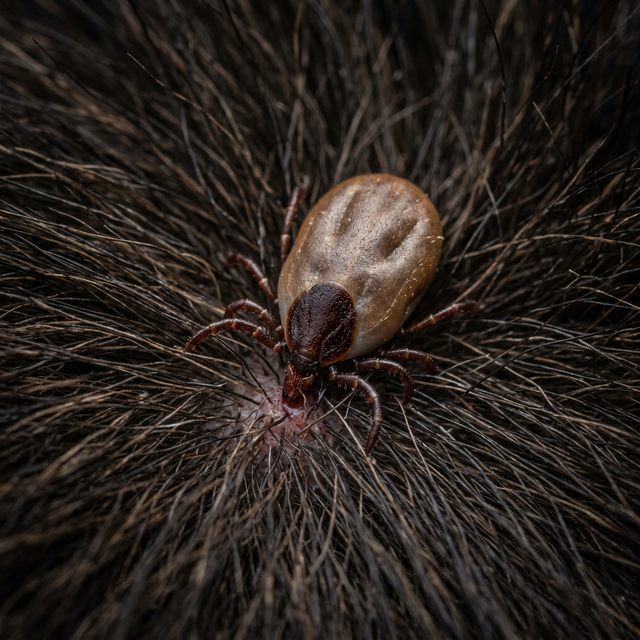
Fleas and ticks are external parasites that feed on the blood of mammals and birds. The cat flea (Ctenocephalides felis) is the most common flea species affecting both cats and dogs in the U.S. Key tick species include the blacklegged tick (Ixodes scapularis, also known as the deer tick), the American dog tick (Dermacentor variabilis), and the lone star tick (Amblyomma americanum). Ticks are responsible for transmitting Lyme disease, Rocky Mountain spotted fever, ehrlichiosis, and other serious illnesses.
Identification
- Fleas: tiny (1.5–3 mm), wingless, laterally flattened, dark reddish-brown, powerful jumpers
- Blacklegged tick: small (unfed: 3 mm), dark brown/black with orangish legs, eight legs
- American dog tick: larger (5 mm unfed), brown with white markings on back
- Engorged ticks swell to several times their original size and turn grayish
- Flea dirt (feces) looks like fine black pepper; turns reddish when wet
Behavior & Habitat
Fleas can jump up to 150 times their own body length. Adult fleas spend most of their life on the host animal, but eggs fall off into carpets, bedding, and furniture. Flea larvae develop in carpet fibers and cracks. A single female flea lays up to 50 eggs per day. Ticks do not jump or fly — they "quest" by climbing grass or low vegetation and waiting with outstretched legs for a host to brush past. After attaching, ticks feed for 3–7 days.
Signs of Infestation
- Excessive scratching, licking, or biting by pets
- Flea dirt in pet fur — use a flea comb to check
- Small, itchy red bites on ankles and lower legs (fleas)
- An embedded tick found on skin or pet — check after outdoor activities
- Flea larvae or pupae in carpets and pet bedding
Prevention Tips
- Use veterinarian-recommended flea and tick preventatives on all pets year-round
- Vacuum frequently, especially carpets, rugs, and pet resting areas
- Wash pet bedding in hot water weekly
- Keep grass mowed short and remove leaf litter from the yard
- Create a 3-foot gravel or wood chip barrier between lawn and wooded areas
Professional Treatment
Flea control requires treating the pet, the home, and the yard simultaneously. Indoor treatments include residual sprays and insect growth regulators (IGRs) that prevent larvae from developing. Carpet treatments, thorough vacuuming, and hot-water washing of all bedding are essential. Yard treatments target shaded areas where fleas and ticks thrive. Multiple treatments may be needed due to the flea pupal stage, which is resistant to insecticides.
Need Fleas & Ticks Control?
Our experts are ready to help. Get a free, no-obligation quote today.
Get a Free Quote Call (844) 578-0573