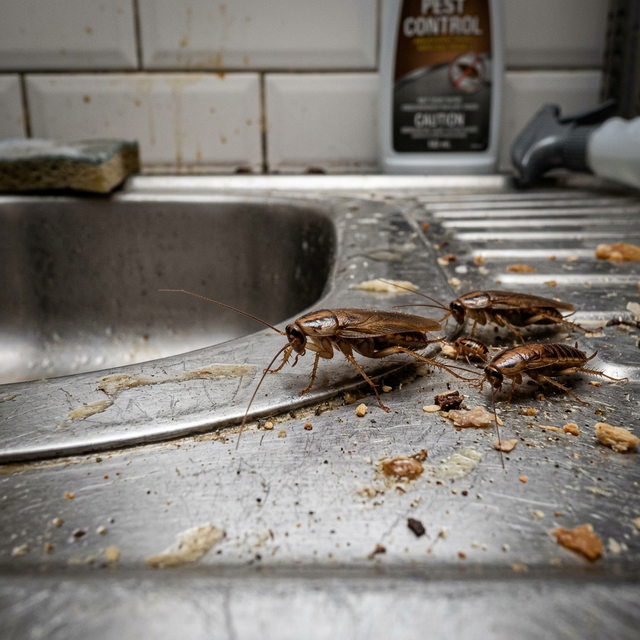
Cockroaches
Blattodea
Overview
Cockroaches are among the most common and resilient household pests, with fossil records dating back over 300 million years. Of the roughly 4,600 species worldwide, about 30 are associated with human habitats. In the United States, the three most problematic species are the German cockroach (Blattella germanica), the American cockroach (Periplaneta americana), and the Oriental cockroach (Blatta orientalis). Cockroaches are known to spread bacteria including Salmonella and E. coli, and their droppings and shed skins are significant allergens and asthma triggers.
Identification
- German cockroach: 13–16 mm, light brown with two dark stripes on the pronotum, most common indoors
- American cockroach: 35–40 mm, reddish-brown, the largest common species, often called "palmetto bug"
- Oriental cockroach: 25–30 mm, dark brown to black, shiny, prefers cool damp areas
- All species have six legs, long antennae, and a flattened oval body
- Most adults have wings, though not all species fly readily
Behavior & Habitat
Cockroaches are primarily nocturnal. Seeing them during the day often indicates a large infestation. German cockroaches reproduce rapidly — a single female can produce 300+ offspring in a year. They prefer warm, humid areas near food and water: kitchens, bathrooms, and behind appliances. American cockroaches often enter from sewer systems. All species are omnivorous and eat nearly anything organic.
Signs of Infestation
- Live cockroaches scurrying when lights are turned on, especially in kitchens
- Droppings that look like coffee grounds or black pepper (German) or cylindrical pellets (American)
- Egg cases (oothecae) — brown, purse-shaped capsules found in hidden areas
- Musty, oily odor in areas with heavy infestation
- Smear marks along walls and surfaces where they travel regularly
Prevention Tips
- Keep kitchen spotlessly clean — wipe surfaces, sweep floors, wash dishes promptly
- Store food in sealed containers; take trash out regularly
- Fix all plumbing leaks and eliminate standing water
- Seal gaps around pipes, vents, and where utilities enter the building
- Reduce cardboard and paper clutter — roaches feed on the glue and hide inside
Professional Treatment
Effective cockroach control combines sanitation, exclusion, and targeted chemical treatment. Gel baits are the gold standard for German cockroaches — they are applied in cracks, crevices, and behind appliances. Boric acid dust is effective in wall voids. For American and Oriental cockroaches, perimeter treatment and sewer access point sealing are essential. Ongoing monitoring ensures long-term control.
Need Cockroaches Control?
Our experts are ready to help. Get a free, no-obligation quote today.
Get a Free Quote Call (844) 578-0573