Bed Bugs
Cimex lectularius
Overview
Bed bugs (Cimex lectularius) are small, parasitic insects that feed exclusively on blood, primarily human blood. They have made a dramatic resurgence worldwide since the early 2000s, partly due to increased travel and resistance to common pesticides. Bed bugs are expert hitchhikers, spreading via luggage, used furniture, and clothing. They do not transmit diseases but cause itchy welts and significant psychological distress.
Identification
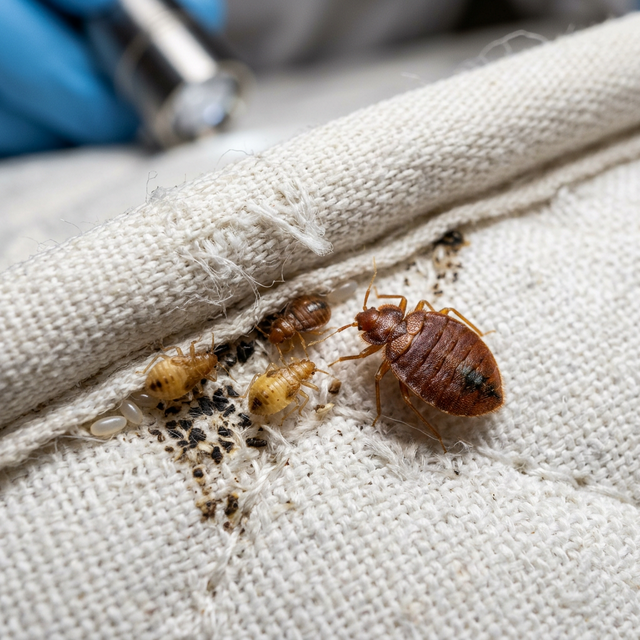
- Flat, oval, reddish-brown body about 4–5 mm long (apple seed size)
- Wingless; cannot fly or jump
- After feeding, body swells and turns more reddish
- Nymphs (juveniles) are translucent to yellowish-white and very small
- Eggs are tiny (1 mm), white, and often found in clusters
Behavior & Habitat
Bed bugs are nocturnal and typically feed while the host sleeps, attracted by body heat and carbon dioxide. A feeding takes 5–10 minutes, after which they retreat to hiding spots. They prefer to hide within 8 feet of where people sleep — in mattress seams, box springs, headboards, bed frames, and nightstands. A single female can lay 200–500 eggs in her lifetime.
Signs of Infestation
- Itchy, red welts in a line or cluster, often on arms, neck, or torso
- Small dark spots (fecal stains) on mattress seams and sheets
- Tiny blood smears on pillowcases or sheets
- Cast skins (shed exoskeletons) near hiding spots
- A sweet, musty odor in heavily infested rooms
Prevention Tips
- Inspect hotel rooms before unpacking — check mattress seams and headboards
- Use protective encasements on mattresses and box springs
- Avoid placing luggage on beds or upholstered furniture when traveling
- Inspect and vacuum used furniture before bringing it home
- Reduce clutter to minimize hiding spots
Professional Treatment
Professional bed bug treatment is strongly recommended due to their resilience. Heat treatment (raising room temperature to 120–140°F) is one of the most effective methods, killing all life stages including eggs. Chemical treatments using residual insecticides target cracks and crevices. Most infestations require 2–3 treatment visits for complete elimination.
Need Bed Bugs Control?
Our experts are ready to help. Get a free, no-obligation quote today.
Get a Free Quote Call (844) 578-0573