Ants
Formicidae
Overview
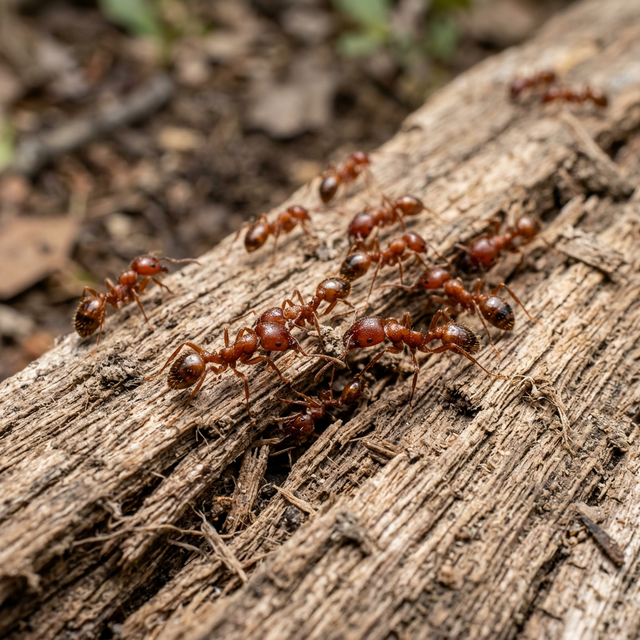
Ants are social insects belonging to the family Formicidae, closely related to wasps and bees. There are more than 12,000 known species worldwide. They form colonies ranging from a few dozen to millions of individuals. In the United States, the most common pest species include carpenter ants (Camponotus spp.), fire ants (Solenopsis invicta), odorous house ants (Tapinoma sessile), and pavement ants (Tetramorium caespitum).
Identification
- Body divided into three segments: head, thorax, and abdomen with a narrow "waist" (petiole)
- Six legs and elbowed antennae
- Carpenter ants: large (6–13 mm), black or dark brown, often found near moist wood
- Fire ants: reddish-brown, 1.5–5 mm, build large soil mounds
- Odorous house ants: small (2.5–3 mm), dark brown, emit coconut-like odor when crushed
Behavior & Habitat
Ants live in highly organized colonies with a queen, workers, and sometimes soldiers. They communicate using pheromone trails, which is why you often see them marching in lines. Carpenter ants excavate wood to build nests (they do not eat wood) and can cause significant structural damage over time. Fire ants are aggressive and deliver painful stings. Most species are attracted to sweet or greasy foods indoors.
Signs of Infestation
- Visible ant trails along baseboards, countertops, or exterior walls
- Small piles of sawdust or wood shavings (carpenter ants)
- Soil mounds in the yard (fire ants)
- Rustling sounds inside walls (carpenter ants in large colonies)
- Finding winged ants indoors, especially in spring — a sign of a mature colony
Prevention Tips
- Seal cracks and gaps around doors, windows, and foundation
- Keep food in airtight containers; wipe down counters regularly
- Fix leaky pipes — moisture attracts carpenter ants
- Trim tree branches and vegetation away from the house
- Remove woodpiles and debris from near the foundation
Professional Treatment
Professional ant control involves identifying the species and locating the colony. Baiting systems are highly effective — workers carry bait back to the colony, eliminating the queen and the entire nest. Perimeter treatments and targeted crack-and-crevice applications prevent re-entry. For carpenter ants, locating and treating satellite nests is critical.
Need Ants Control?
Our experts are ready to help. Get a free, no-obligation quote today.
Get a Free Quote Call (844) 578-0573